
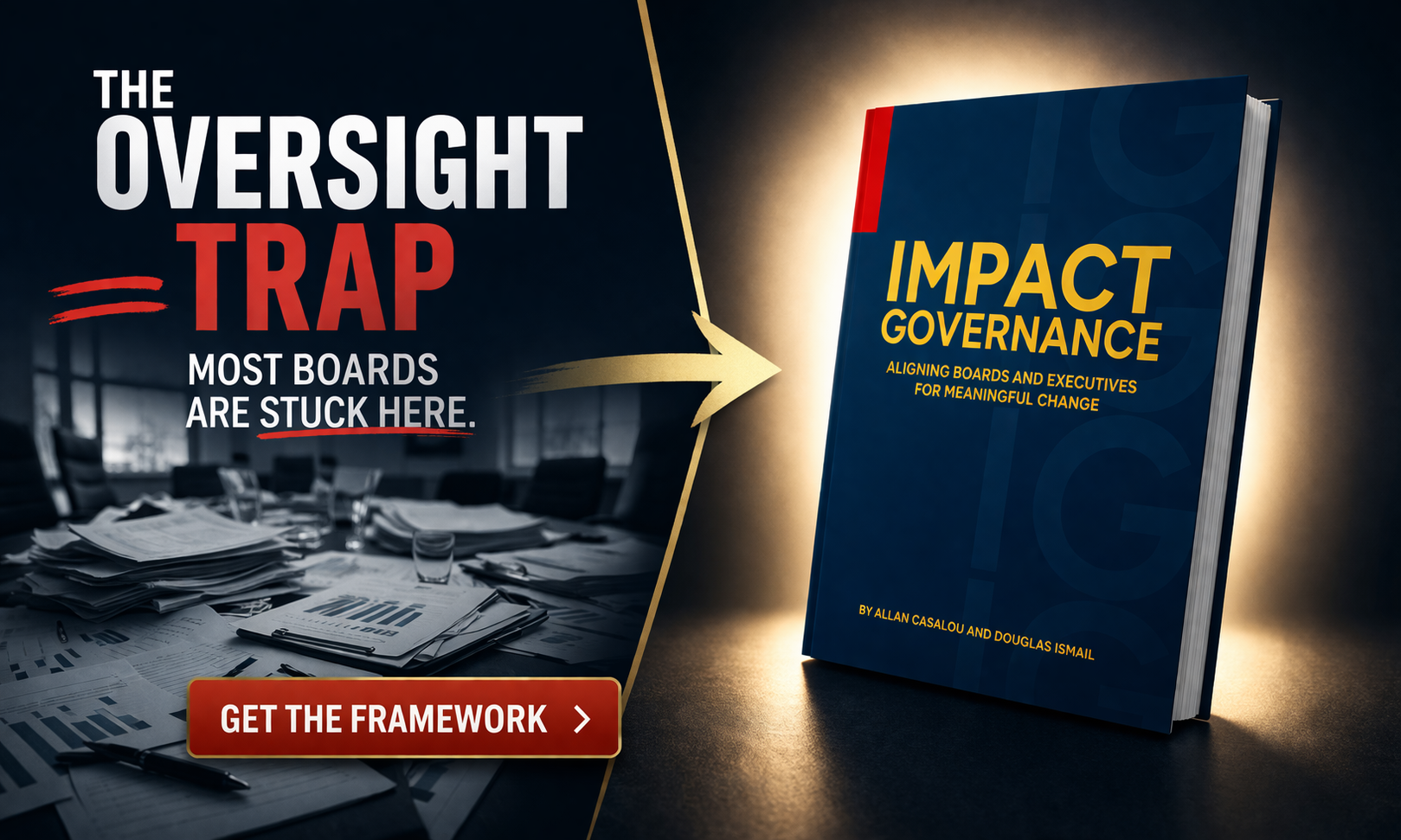

In the evolving world of mission-driven leadership, the traditional definition of “oversight” is reaching its breaking point. Most nonprofit consultants will tell you that a board’s job is to review financials, approve budgets, and hire the CEO. While those tasks are legally required, they represent the floor of governance—not the ceiling.
To achieve true mission stability, boards must move from passive oversight to the Discipline of Stewardship.
The Oversight Trap vs. The Stewardship Solution
Traditional oversight is reactive; it looks at what happened in the last quarter. Stewardship, however, is proactive and generational. It asks: “What is the core value of this organization that we must protect for the next thirty years?”
When a board operates solely on oversight, they often fall into “micromanagement” or “rubber-stamping.” This creates a vacuum in leadership. The Impact Governance Method fills this vacuum by establishing a clear Board Governance Framework centered on the future, not just the past.
Stop reacting and start leading. Get exclusive early access to the “Stewardship Framework” chapters of our upcoming Board Governance Book: Impact Governance: A Complete Guide.
3 Pillars of the Stewardship Framework
For nonprofit consultants and internal leaders looking to modernize their boards, the transition requires three fundamental shifts:
- From Compliance to Outcome Clarity: Instead of just checking boxes, the board must define the specific “Impact Outcomes” they are accountable for delivering to the community.
- From Reporting to Results for Learning: Meetings should move away from “What did we do?” toward “What did we learn, and how does it affect our long-term strategy?”
- The Governing Center: The board must act as the anchor. While staff and CEOs may change, the Governing Center remains the constant force that prevents mission drift.
The New Standard for Board Excellence
As we outline in our new board governance book, stewardship is a learned discipline. It requires a structural change in how meetings are run, how information is filtered, and how Board Member Training is conducted.
When a board embraces this framework, they stop being a “necessary hurdle” for the CEO and start being a strategic asset. This alignment is what separates surviving organizations from those that change the world.

Schedule a Strategy Session
Is your board stuck in the “Oversight Trap”? Our nonprofit consultants specialize in implementing the Impact Governance Method to align your leadership and protect your mission’s future.
Leave a Reply